News Story
As the academic year draws to a close, our Artistic Director reflects on her own experience and the vital role the Unicorn plays in supporting creative practice in schools.
My younger child is leaving primary school this week. And it’s got me thinking about the arts in primary education. In my role as Artistic Director of the Unicorn Theatre, I’m lucky enough to see the benefits of the arts in schools and what regular contact with creativity brings, through our own in-depth work with children and families and the daily excitement from children experiencing theatre for the first time. And our just published Creative Schools Impact Report shares the very real results which embedding Drama can bring to pupils.
My own children have been at a primary school which places real value on arts and creativity; however, unlike for Music and Art, it doesn’t have specialist Drama provision, so events such as this are created by class teachers. In the end of year 6 show last week there was a hugely diverse mix in skill ; some natural performers, others giving it a go for the first time, some working backstage or operating the lights – but they all came together to create something to mark this enormous milestone in their lives. These end-of-year shows are even more impactful when Drama has been present throughout the year, both woven into curriculum teaching and when budget can befound for a theatre-trip.
This isn’t the case in all Primary schools as the most recent Cultural Learning Alliance Report Card showed, with only 9% of schools having a Drama Lead teacher. There is also a shocking lack of Arts time in schools, which has declined further over the past two years. A recent evidence review from the RSC reinforces our own experience that Drama has a significant impact on crucial skills of oracy and critical thinking, and is an essential tool to meet current education priorities. It also brings great riches for both children, teachers and schools alike – yet is often sidelined or even non-existent in children’s primary learning.
I know from my own childhood that whether in the classroom, school hall or theatre, drama experiences shape a child’s life journey and lead to rich and complex discoveries about the world. I benefitted hugely from free access to arts provision at school, where music lessons were free and local touring theatre companies brought shows to our small village school in Yorkshire. The reality today is stark in comparison; the CLA’s recent statistics makes it shockingly clear there is a very real entitlement gap for children, with take-up of arts subjects dwindling in areas with highest free school meals eligibility.
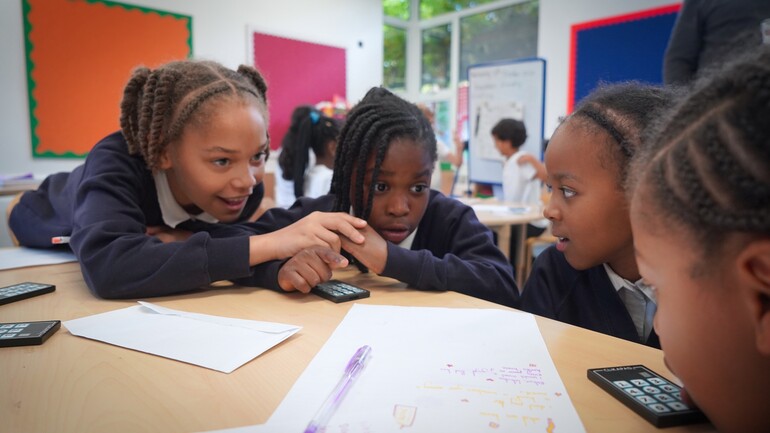
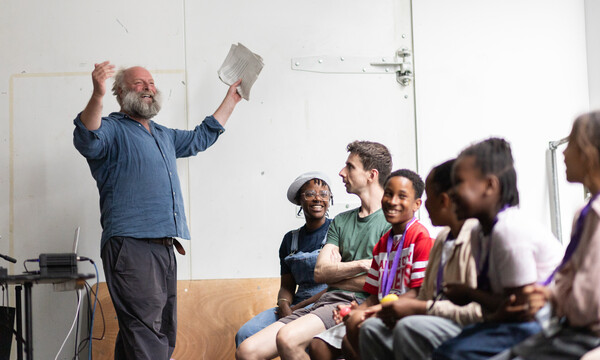
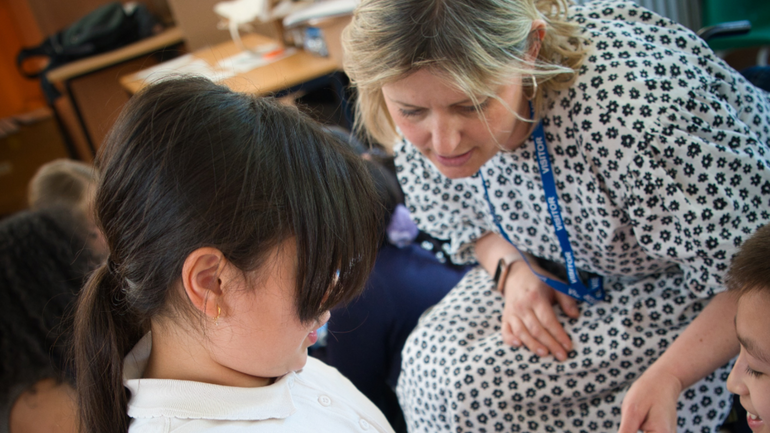
At the Unicorn, our Creative Hub school partnerships are borne out of the need to address this shocking inequality by bringing specialist practice directly to children in our local schools. Over three years our team works closely with children and staff across the school, embedding Drama-rich curriculum teaching to support strategic priorities, and involving children directly in the development of work on our stages through collaboration with artists and facilitators. These are long-term relationships which result in real impact for children, teachers, school culture and artists alike. And alongside the workshops and projects, schools get free tickets to all our shows throughout the season, enabling them to bring children of all ages – often also with their parents or other adults – to the Unicorn.
This work is time and resource costly. It takes real effort and drive from the Unicorn and from schools to embed Drama effectively. We work with three or four local schools at a time, selecting them from the application process in which they share both why they need it and how committed they are. And it takes commitment on both sides to make this all happen. Our recently published Creative Schools report shows clearly that there are huge, measurable benefits to this art-rich approach to education which extends far beyond the Arts skills and into all areas of learning and child development.
There is lots of incredible practice by arts organisations across the country – a constant endeavour of reaching into schools and children’s minds to broaden their experiences with art. But it’s not enough. Arts organisations have had to become more central to the delivery of Arts subjects in school as school budgets have been squeezed - we are plugging a gap. An arts-rich education isn’t available to every child in this country. The forthcoming changes to the curriculum are a step in the right direction, as is the proposed National Centre for Arts and Music Education, but in this rapidly changing world the skills developed through drama are only going to become more essentialand when Drama exists as enrichment activity inequalities will always exist.
As I watched my daughter and her classmates in their show last week, I thought about how much they would have gained from a programme such as ours. My dream would be to roll our Creative Hub schools' model out across the UK, funded by government and working in partnership with regional arts organisations to share this complex, rich in-depth way of working. Whilst my personal experience with primary education has come to an end, my drive to champion access to Drama does not. Children have a right to an Arts-rich experiences that go beyond the stage and reaches into every area of their educational journeys.
Our work here is a drop in the ocean; one day I hope all our children will be able to swim in its riches.